How whitening actually works
Nearly every whitening product that produces real change runs on one mechanism: peroxide. Hydrogen peroxide breaks apart the stain compounds that lodge in and on tooth enamel — the accumulated residue of coffee, tea, red wine, and smoke — through oxidation, the same chemistry that makes it a household bleaching agent, delivered at low, formulated concentrations.
Whitening addresses these acquired surface and near-surface stains. It does not change the underlying color of a tooth's inner structure, which is why results vary person to person and why the honest-limits section further down deserves your attention before any purchase.
Hydrogen vs carbamide: the 1:3 rule
Two peroxide types dominate the ingredient panels. Hydrogen peroxide acts fast and releases most of its power in the first half hour or so — the chemistry of strips and short-wear gels. Carbamide peroxide is a slower-release compound that breaks down into hydrogen peroxide over hours, suiting longer tray sessions.
The conversion that makes labels comparable: carbamide peroxide delivers roughly one-third its number as hydrogen peroxide. A 35% carbamide gel is in the neighborhood of a 10–12% hydrogen gel — not three times stronger than it, as shelf comparison would suggest. That one ratio deflates half the numeric intimidation in this aisle.
The peroxide-free tier, honestly
Peroxide-free products — typically built on alternative agents or polishing abrasives — trade whitening power for gentleness. They are the reasonable starting point for highly sensitivity-prone users, and the honest framing is exactly that: gentler action, more modest and slower change. What 'gentler' trades away is speed and depth; a box that promises both gentleness and dramatic speed is making the claims decoder's favorite kind of claim.
The claims decoder: what a 'shade' even is
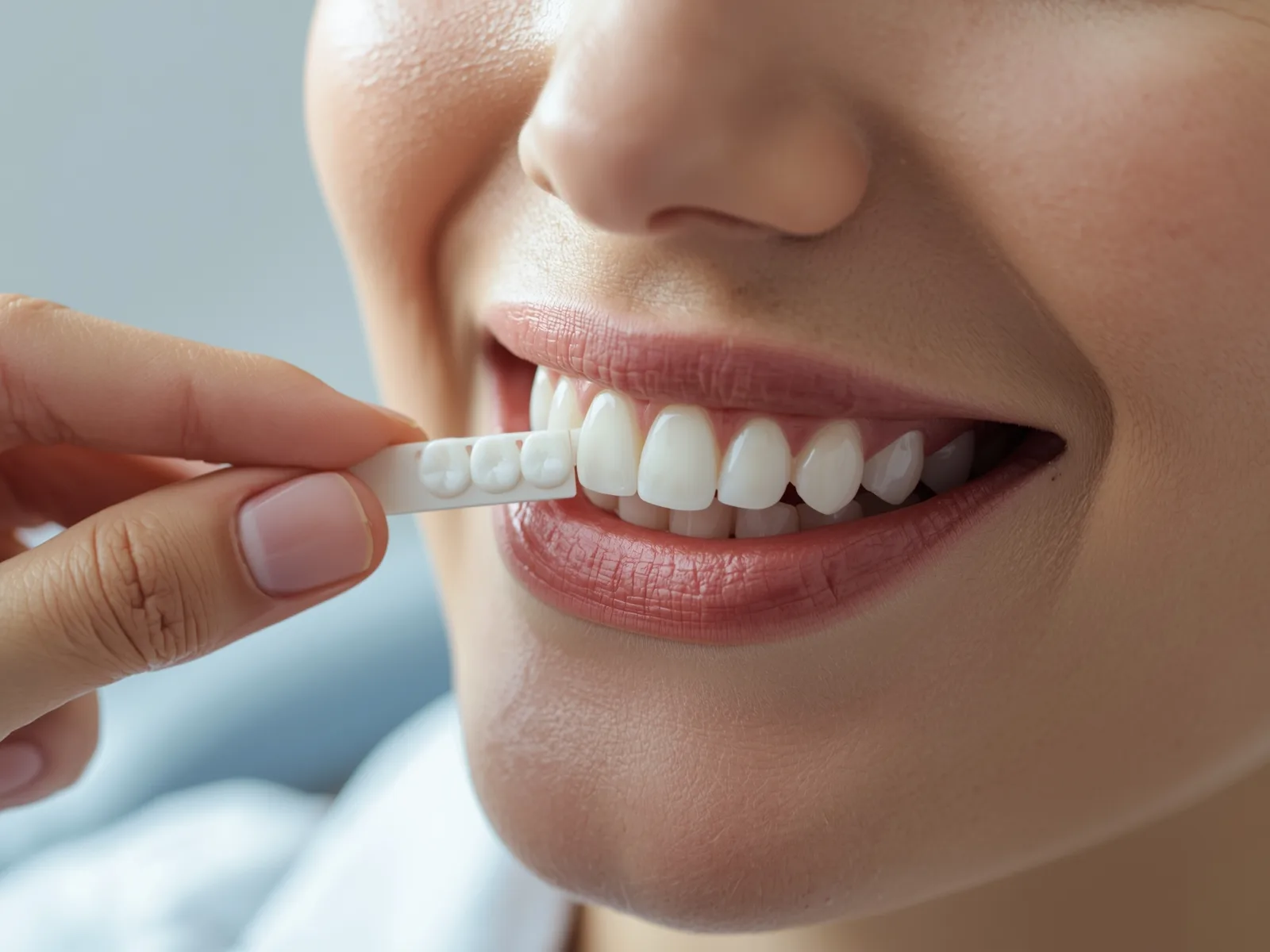
Here is the open secret of this market: 'shades' are not a standardized unit. Dental shade guides are physical sets of tooth-colored tabs arranged from light to dark, and several different guides exist with different numbers of steps arranged in different orders. When one box says '8 levels' and another says '10 shades in 7 days,' they are usually measuring on different scales under different conditions — the numbers cannot be compared, and the market quietly depends on you not knowing that.
Realistic expectation-setting, in plain words: peroxide whitening produces its most visible change on heavily surface-stained teeth, and a movement of a few shade-guide steps is a genuinely visible, satisfying result. The dramatic before-and-afters in advertising combine ideal starting conditions, the strongest protocols, and generous lighting.
Reading any whitening box in 60 seconds
Four checks tell you nearly everything. One: the active — which peroxide, at what percentage (apply the 1:3 rule to carbamide). Two: the wear protocol — minutes per session and sessions per box; that is the real dosage. Three: the shade claim — treat any 'X shades in Y days' as decoration unless the box names its scale, which it almost never does. Four: the sensitivity provisions — a desensitizing ingredient on the panel, and a stated path for sensitive users. Kits pass or fail on those four lines, not on the smile photo.
The concentration table: percent, wear time, sensitivity, speed
No ranking page assembles this, so here it is — the whole decision in one honest mapping. Low strength (roughly 3–6% hydrogen peroxide, or carbamide in the ten-to-low-twenties): longer or repeated wear, the gentlest sensitivity profile, the slowest visible change — the right entry point for first-timers and sensitivity-prone users. Medium strength (roughly 6–10% HP, or ~20–35% carbamide): the mainstream home-kit band, including ours — visible change over one to three weeks of consistent sessions, manageable sensitivity for most users. High strength (mid-teens HP and up): shorter wear, faster movement, the strongest sensitivity bite — territory where professional supervision is the sensible route.
The budget-tier truth sits inside that table: a mid-strength peroxide gel is a mid-strength peroxide gel, whether the box cost $25 or $150. The premium price often buys packaging, accessories, and brand — sometimes a nicer tray or a stronger light, rarely different chemistry. Check the active and the percentage, and let the table do the comparing.
Our two heroes, in the table's own terms
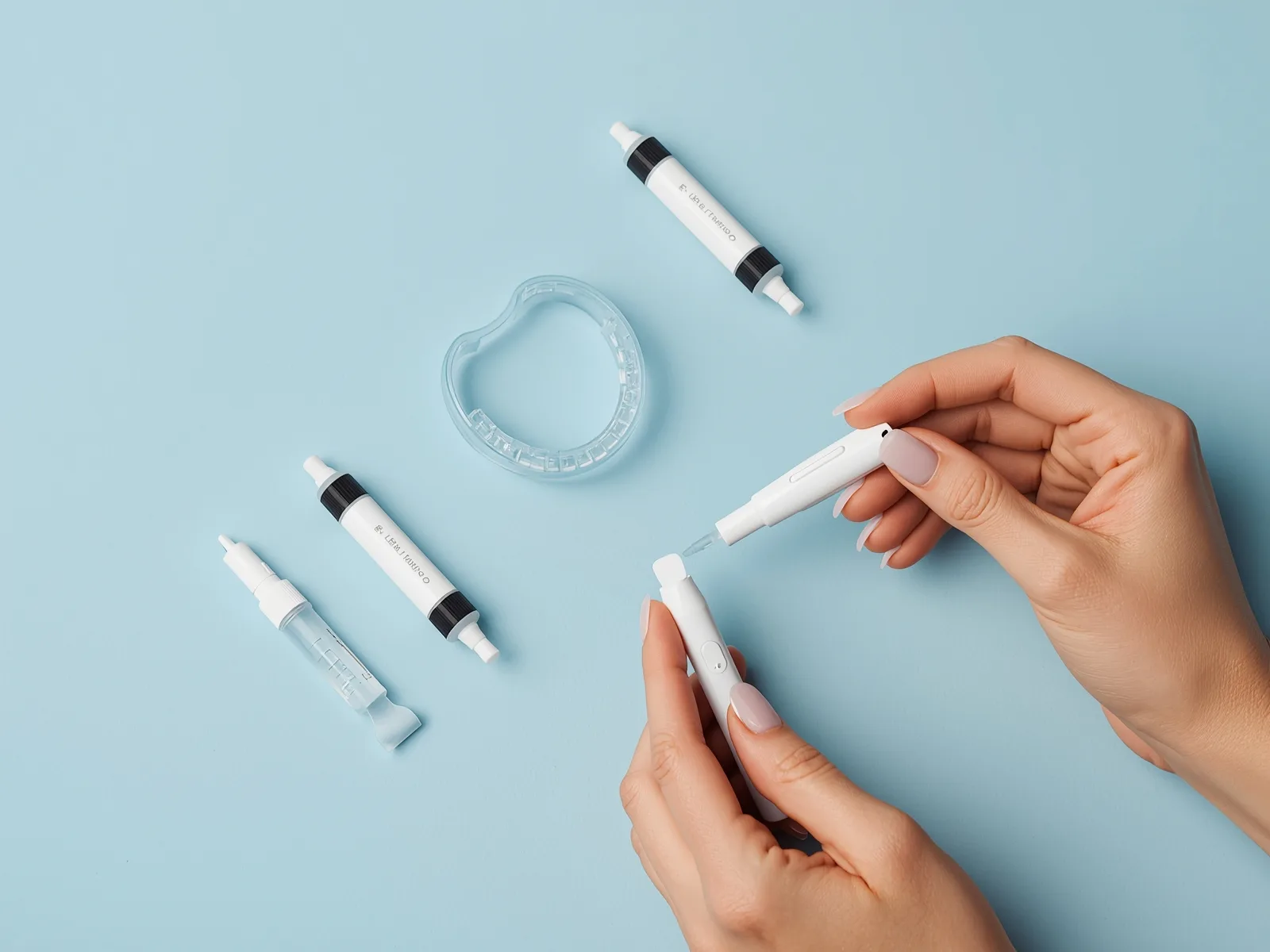
The 888 Smiles LED kit ($20–40) is a mid-strength carbamide tray system with a timed light: gel syringes, a mouth tray, and a session structure that makes the two-to-three-week run easy to keep. In the concentration table it sits exactly where a first serious whitening effort should — visible movement, manageable sensitivity, drugstore price.
The whitening pens two-pack ($15–25) is the maintenance half: one for home, one for the bag, about a minute per application on the teeth that show. Run the kit for the baseline change, then hold the result with the pens after stain-heavy stretches — that pairing, not either alone, is the honest budget strategy this whole page adds up to.
Week-by-week, expect the pattern the timeline section describes: little to nothing the first few days, the satisfying visible shift somewhere in week one to two, then diminishing movement as you approach your teeth's natural ceiling. Consistency, not intensity, is what finishes the run.
The honest timeline: first change, plateau, rebound, maintenance
Whitening results follow a curve nobody prints on the box. First visible change arrives after several consistent sessions — days three to seven for most mid-strength protocols. Then comes the plateau: each session moves less than the one before, because you are approaching the natural color of your tooth structure, which peroxide does not change. Chasing the plateau with extra sessions buys sensitivity, not brightness.
Then rebound — the part almost nobody mentions: teeth drift slightly darker in the weeks after a whitening run as they rehydrate and daily staining resumes. It is normal, it is modest, and it is why the maintenance rhythm exists: a pen touch-up or a short tray session every few weeks, plus the unglamorous fundamentals — rinsing after coffee, a straw for the daily iced tea — holds the result without re-running the full protocol.
The sensitivity playbook
Sensitivity is the category's most common side effect and most shoppers' biggest hesitation, so plan for it rather than hoping past it. Temporary sensitivity during a whitening run is a known, normal effect of peroxide gels; it typically settles after the run ends. Start low and slow if you are prone: lower concentration, shorter wear, alternate days — the table above is built for exactly that adjustment.
Two ingredients earn their place on the panel: potassium nitrate, which calms the nerve response, and fluoride, which supports enamel — the pair behind most 'sensitive formula' variants. Using a desensitizing toothpaste in the weeks around a whitening run is the cheap, sensible complement.
Hard limits, stated plainly: veneers, crowns, and other dental work do not whiten — peroxide acts on natural enamel, so restorations hold their color while surrounding teeth change. Whitening over braces produces uneven results when the brackets come off. And persistent sensitivity, gum irritation, or any existing dental condition is a talk-to-your-dentist-first situation — not because a box says so, but because a dentist can tell you which stains you have and what will actually move them.
Reading the trust signals on the box
The category leans hard on trust language: professional endorsements, 'dentist-formulated,' clinical vocabulary, and money-back windows of thirty to sixty days. Decode them the same way you decode shade claims. An endorsement tells you a professional was involved somewhere; it does not change the percentage on the ingredient panel. A guarantee is real value — it prices in the genuine variability of results — but read its conditions before counting on it.
The signals that deserve the most weight are the quiet ones: a clearly stated active and concentration, a realistic protocol, named desensitizing ingredients, and honest limits printed where you can see them. Boxes confident in their chemistry tend to tell you what it is.
What premium kits genuinely add — and when budget is simply right
Spending more sometimes buys real things: custom-molded trays fit better than boil-and-bite and hold gel more evenly; stronger professional-grade protocols move color faster under supervision; and in-office whitening compresses weeks into an afternoon at many times the price. Those are honest advantages, honestly priced.
What premium rarely buys is different chemistry at the same concentration band — the molecule does not know what the box cost. If your teeth respond to peroxide, a $30 kit run consistently for three weeks delivers most of what a $150 kit delivers on the same active and percentage. The budget tier is not the compromise position in this market; done knowledgeably, it is the value position. That is the tier we chose to build in, and this page is the knowledge that makes it work.